
Do you need a contract with an influencer? What the agreement must cover
Updated 8 November 2026.
You don't need a formal contract to work with an influencer, but you do need the terms in writing, dated, and accepted by both sides before any work starts: what's being delivered, by when, for how much, which lines must be in the post, what you can reuse, and when payment happens. A brief that the creator accepts as written does this; so does a signed contract. A template nobody reads does not.
What the agreement must cover
- The deliverable, exactly.
- The date.
- The fee, and when it's paid (after the post is checked).
- The must-have lines: disclosure, mention, phrase, link, how long the post stays up.
- Usage rights: where you can repost, whether you can use it in ads.
- What happens if the post misses a line: a correction, and how many rounds.
What templates get wrong
Most influencer contract templates are ten pages written for agencies: exclusivity clauses, morality clauses, indemnities. For a $300 Reel, they scare off good creators and nobody reads them. The six points above, in plain words, on one page, accepted in writing, protect both sides better than a template nobody understood.
Keep the versions
If the terms change during the conversation (a new date, a higher fee), keep each version with its date, and be clear which one was accepted. "But you said" disputes are almost always about which version was final.
How UpShout helps
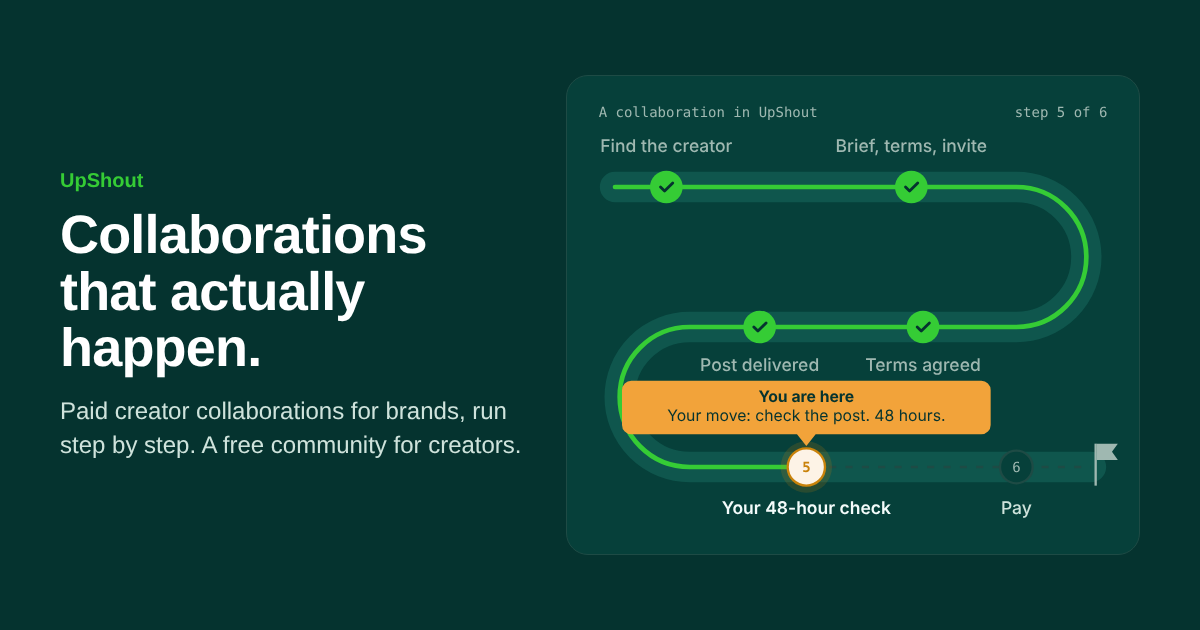
On UpShout the brief is the agreement: the creator accepts a numbered version, the accepted version and the time go on the record, every later version is kept, and both sides can download the record as a PDF. No contract to write. Create a brand account
Questions people ask
Is a DM agreement legally binding? A written agreement in any channel can be, but a thread is hard to point to later. Keep one accepted version in one place.
Should the contract include the FTC disclosure? Make #ad a must-have line in the terms, so it's checkable when the post is live.
Who writes the agreement, the brand or the creator? Usually the brand proposes and the creator asks for changes. One side holds the pen; both accept.
UpShout is a collaboration platform for creators and brands. Creators find audience-matched partners for shoutout exchanges and collaborations, free. Brands run paid creator collaborations step by step, with clear terms, a 48-hour check and a record both sides can see.